
The Swan Valley 50K quickly became one of the most challenging races I’ve ever run. I knew it would be a low-key, grassroots event—organized by a friend as a “try out a 50K”—but nothing prepared me for how unpredictable and mentally demanding it would be. Early on, I got lost several times and had to backtrack to find the trail again. Those moments chipped away at my confidence, turning what should have been a steady effort into a fight just to stay focused and calm.
At mile 26, I hit the hardest part of the course: a brutal 700-foot climb in under a mile. By then, frustration from the wrong turns and hours on my feet had built up. That climb felt endless. Somewhere halfway up, my resolve cracked. I wasn’t thinking about finishing the race anymore; I was just trying not to quit.
When I finally reached the top, I dropped my pack, sat on a rock, and let myself feel defeated for a moment. But after a few fruit snacks and a deep breath, something shifted. I didn’t feel strong—but I did feel willing. I stood up and told myself: Get to the aid station. That’s it. Just that. From there, the next goal became the finish. Step by step, I rebuilt my momentum.
I crossed the line in 7 hours and 48 minutes, far from my original 4-hour goal—but in a strange way, more proud of this finish than almost any other. It proved that success isn’t always about speed. Sometimes it’s about refusing to stay broken.
During the run, I shared a few miles with another athlete who told me his story. He had once signed up for a marathon, barely trained, and finished in just under 5 hours—but felt disappointed because he knew he didn’t give his best. The next year, he trained consistently and finished in 3:30. His improvement didn’t come from talent—it came from discipline.
That conversation stuck with me. There are no shortcuts in distance running or in life. Hard work, consistency, and showing up when you don’t want to are the real difference-makers. This 50K reminded me that every mile, every climb, every result must be earned.
I trained well for this race. I felt ready. But preparation doesn’t guarantee smooth paths or predictable outcomes. Sometimes the trail disappears. Sometimes the climb is steeper than expected. Sometimes your spirit breaks even when your body doesn’t.
What matters is the choice to continue—not because you feel strong, but because the goal still matters.
Finishing far slower than planned could have felt like failure. Instead, it became a reminder that effort doesn’t entitle us to perfect results. Even when we train, work hard, and do everything “right,” life can still push back. But we’re capable of surviving those moments—and growing from them.
Ultramarathons are powerful because they strip away excuses. They show you exactly who you are when everything hurts and the plan falls apart. For me, the Swan Valley 50K proved that when I feel empty, I can still take another step. And sometimes, that’s enough.
The Swan Valley 50K pushed me harder than I expected. It broke me down, forced me to reset, and ultimately taught me that progress is built one step at a time. If you’re thinking about trying an ultramarathon—or facing any uphill battle in life—remember this:
You don’t need to feel strong to keep going.
You just need to take the next step.
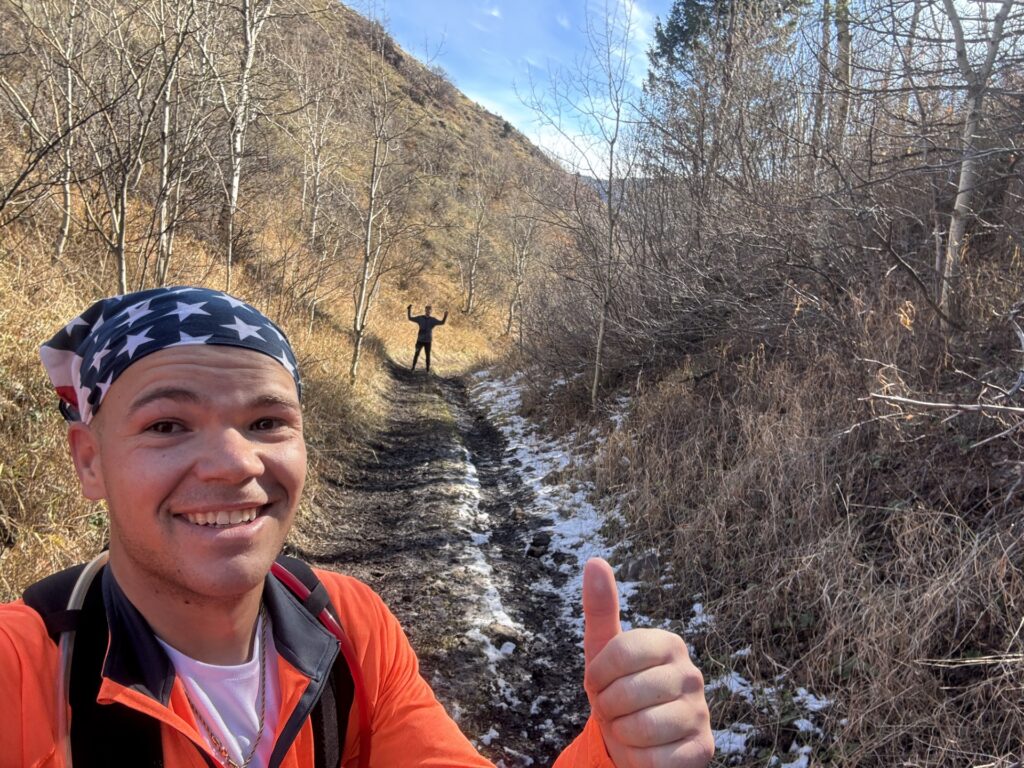
If you’re reading this and wondering if ultra-running or a hard trail race is even worth it — check out these athletes. Their stories remind us that limits are often self-imposed, and that willpower carries more weight than comfort.
Matthew Johnson — Run Across Texas
From October 1–18, 2024, ultrarunner Matthew Johnson ran across the state of Texas, covering over 800 miles in 17 days (averaging 50+ miles/day). The challenge raised nearly $30,000 for veteran support through his charity partner. ATRA+1
Calum Neff — 50K & Ultra-Trail Champion
Calum recently set national records and wins in 50K races and trail ultramarathons — showing that whether it’s 31 miles or 100 miles, consistency and grit win the day. Wikipedia
Jim Walmsley — Elite Ultra Runner & Trail Legend
Known for conquering ultra-trail classics like the Western States 100 and setting multiple course records, Jim embodies endurance, mental toughness, and the mindset required when the going gets toughest. Wikipedia